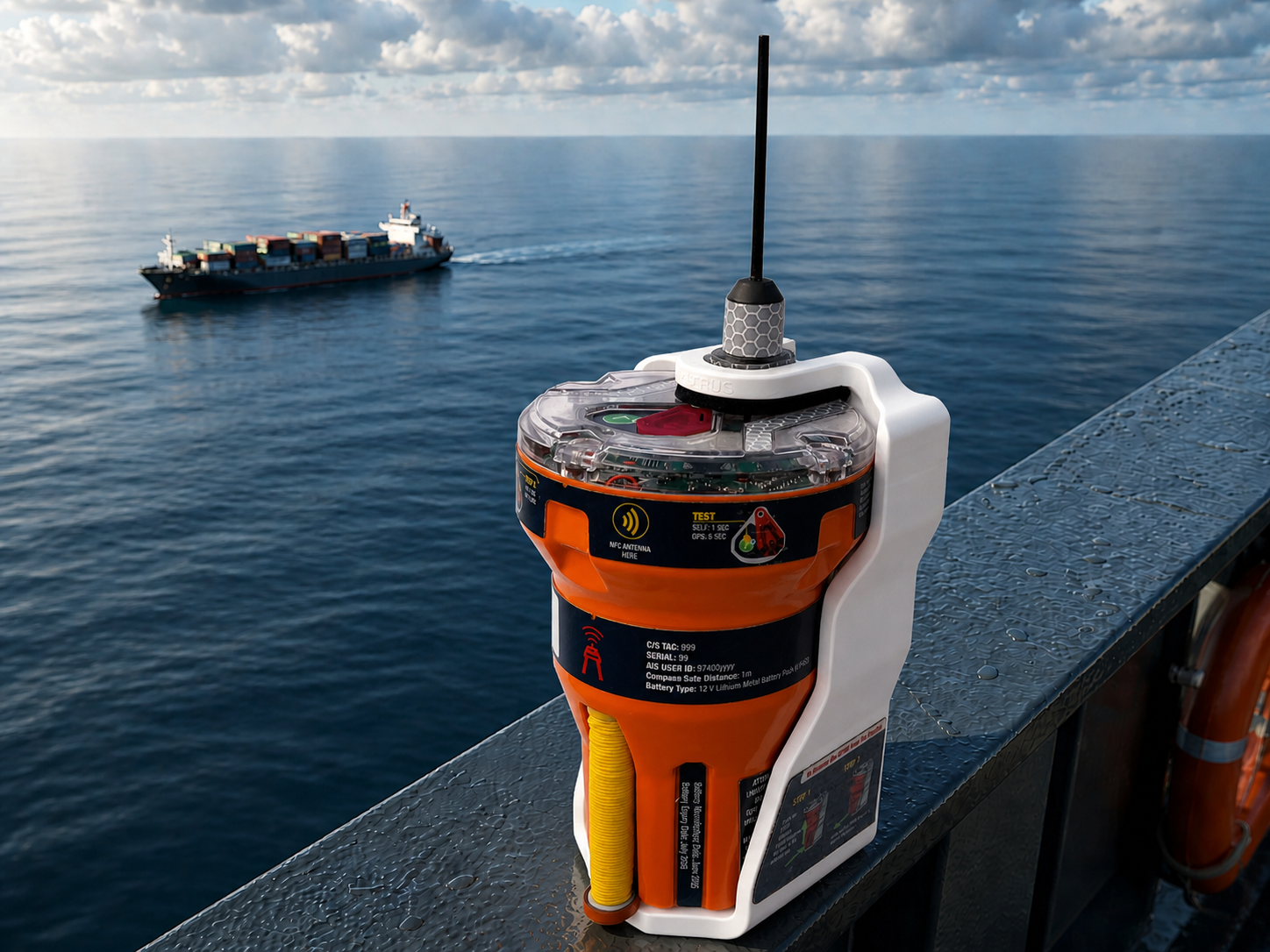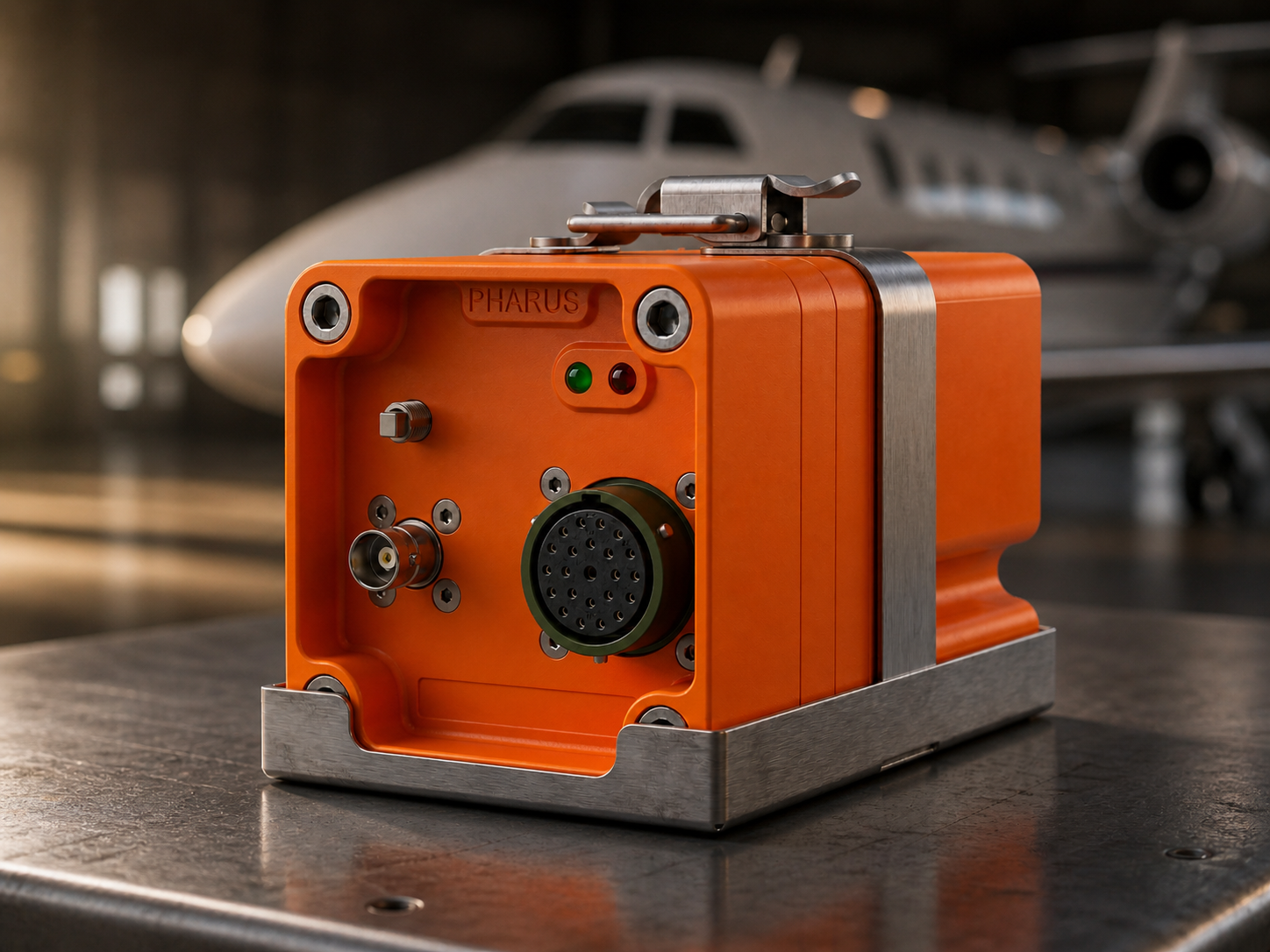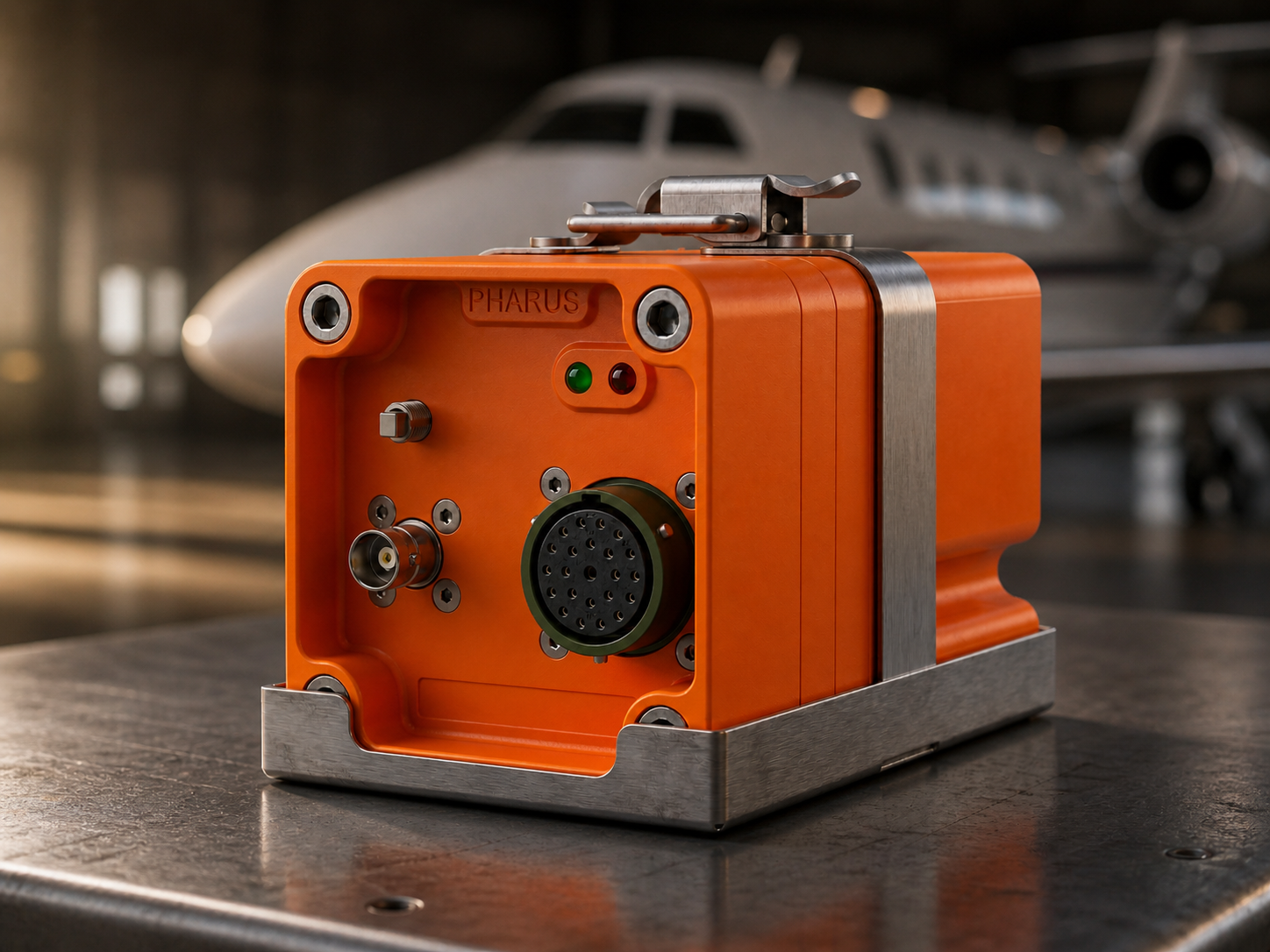
Pharus Tech has successfully closed the PDR milestone of the ELT AF/AP Didyma equipment being designed for aircraft last week. So what does this mean? When will the ELT AF/AP Didyma equipment be ready for sale? What will its features be?
The PDR milestone stands for Preliminary Design Review and is intended as an agreement between the authority and the designer organization regarding the design principles & features of the device. In aviation equipment, project progression is subject to the authority's approval and reviews: In this context, following the PDR, there are CDR (Critical Design Review), TRR (Test Readiness Review) and QR (Qualification Review) milestones. With the closure of the PDR milestone, the features and capabilities to be provided in ELT AF/AP Didyma have been finalized.
ELT AF/AP Didyma is a Portable Type Class-1 Emergency Locator Transmitter. In other words, it is an Emergency Locator Transmitter equipment that can be removed and carried by the aircraft crew, suitable for portable use, capable of operating between -40 and 55 oC temperature range, and can be activated both manually and automatically.
Automatic activation will be provided in the following scenarios:
| In the Direction of Flight | >6G acceleration |
| Other Than Flight Direction | >12.5G acceleration |
As previously mentioned in the "ELT AF/AP Didyma" article, there is a false alarm problem reaching up to 90% in existing ELTs worldwide. This problem is reflected as time loss and financial expenditure on Cospas-Sarsat Mission Control Centre (MCC) operations globally. An agreement has been reached that the ELT AF/AP Didyma equipment will have a technical feature to minimize the false alarm problem: When an optional +28VDC external power supply is connected to the ELT from the aircraft, it has an "Embedded Optional Monitoring Circuit" that continuously evaluates acceleration and crash/damage presence in parallel. This circuit does not draw power from the ELT's battery; when power is supplied from the aircraft, it examines whether a crash has actually occurred and prevents false alarms in hard landing & hard takeoff & turbulence scenarios. In this regard, the design team anticipates that ELT AF/AP Didyma will be certified as the most modern and most reliable ELT equipment.
Another technical feature finalized in ELT AF/AP Didyma is the removable practical battery module. Thus, a more practical and faster battery replacement process is provided in battery replacement & fault detection scenarios. Without going to a factory or sending the ELT equipment back to the manufacturer, any maintenance technician trained by Pharus Tech can replace the battery in as short as 10 minutes, and the internal structure of the ELT equipment will not be interfered with in any way.
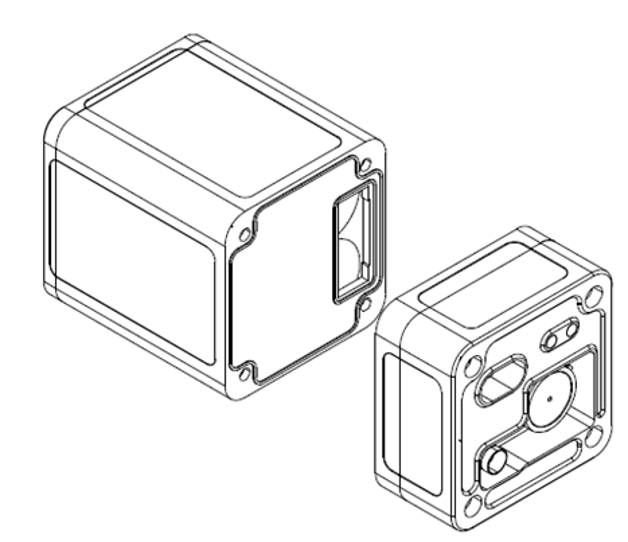
Designed to suit the usage scenarios of many existing air platforms worldwide, ELT AF/AP Didyma is being designed with the following environmental condition resistance criteria:
| Operating Altitude | Maximum 25,000 ft |
| Operating Temperature | -40 to 55 oC |
| Survival Temperature | -40 to 85 oC |
| Vibration | RTCA/DO-160G: Section 8.2 – Cat. U2 |
| Crush | 455 Kg (690 KPa – 100 psi) |
| Shock | 500g @ 5 ms |
| Impact | 2000 KPa (290 psi) |
| Decompression | 69 KPa (10 psi) to 6.9 Kpa (1 psi) @ 25 sec |
| Humidity | RTCA/DO-160G: Section 6 – Cat. B |
Due to its portable feature, ELT AF/AP Didyma also has water flotation and waterproof capabilities: The front face of the ELT connected to the antenna is designed to remain above and balanced on the water surface.
ELT AF/AP Didyma, together with its Mounting Tray and Auxiliary Portable Antenna, weighs 1150 grams and measures 13.6 cm in length, 8.6 cm in width, and 9.7 cm in height.
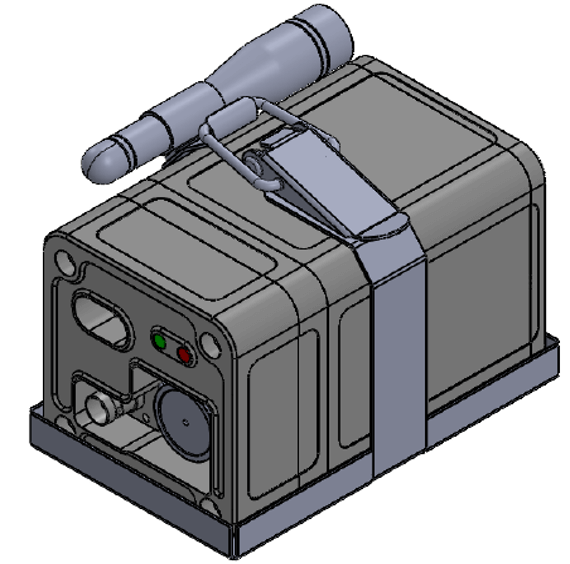
Designed to broadcast on 406 MHz to the Cospas-Sarsat satellite system and on 121.5 MHz to terrestrial radio receivers for at least 48 hours upon activation, ELT AF/AP Didyma has an Embedded GNSS Receiver capable of providing more precise position data in portable use and detecting GPS Spoofing & Jamming attacks.
ELT AF/AP Didyma also has an optional ARINC429 and Discrete format electrical communication interface that can be used by the aircraft integrator. This communication interface provides the following capabilities:
- Real-time position data reception and storage from the aircraft by the ELT
- Remote programming via ARINC429 communication protocol (ICAO 24-bit Aircraft Tail ID and Country Code)
- Remote activation / deactivation by the Cockpit ELT Control Panel
- Remote Built-in Test (BIT) execution by the Cockpit ELT Control Panel
This communication interface operates with the +28VDC external power connection optionally connected from the aircraft and does not consume power from the ELT's internal batteries. The ELT can also conveniently provide the following information & feedback through this optional communication interface:
- Reporting the date and results of the ELT's last Built-in Test (BIT)
- Reporting the programmed ICAO 24-bit Aircraft Tail ID data in the ELT
- Reporting the programmed country code data in the ELT
Developed with a focus on simplifying the workload of aircraft manufacturing & maintenance and operational management companies as much as possible, ELT AF/AP Didyma is integrated into the aircraft via a practical sheet metal clamp Mounting Tray that can be installed in less than 10 minutes.
The ELT AF/AP Didyma project, being designed as DAL-D in RTCA/DO-178C and DO-254 processes, is anticipated to complete all its qualifications and be ready for sale by July 2026.